The question beneath formationWhat is a human life for?
Before asking how education should form a person, ask what a human being is.
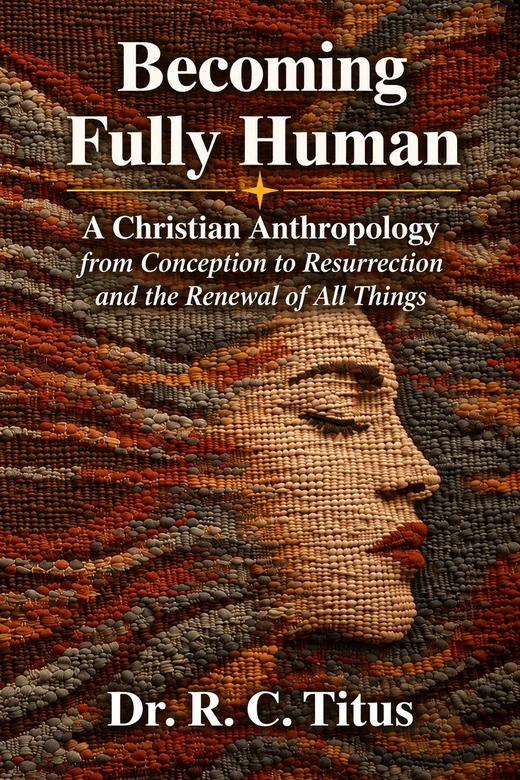
Becoming Fully Human offers a Christian anthropology that follows the human story from conception through life, death, resurrection, and the renewal of all things. It considers persons as embodied, relational, developing, vulnerable, image-bearing creatures who receive life and respond to grace.
Childhood, work, friendship, worship, service, suffering, aging, and dependence are not treated as rungs on a ladder of human worth. They are contexts in which people love and are loved, give and receive, and encounter the limits of self-sufficiency. Christ stands at the center of this account of humanity and hope.
For Christian educators and readers interested in the foundations of formation, the book addresses the question beneath educational method. It is a theological account of the person, distinct from an instructional guide or a system for measuring spiritual maturity.
Inside the bookThe person before the performance.
- 01
Dignity before achievement
Life received as gift and the image of God, without making ability, independence, or usefulness the measure of a person.
- 02
One embodied, relational life
Body and soul, relationships, development, and the settings that shape what we notice, love, and do.
- 03
Fracture without worthlessness
Sin, disordered love, evil, and responsibility, held together with protection, care, and the need for grace.
- 04
Christ and holy love
The humanity revealed and restored in Christ, with grace preceding, reconciling, and transforming our response.
- 05
Hope beyond self-improvement
Resurrection and new creation as God’s promised action, not the final achievement of a successful life.
One human storySix overlapping movements.
These movements belong together. A child can give love, an adult can need care, and faithful participation begins before life’s final horizon. They are not a required sequence, a measure of anyone’s worth, or steps that earn salvation.
- Receive
- Life and love are received before achievement.
- Become
- As we change, we ask what our abilities should serve.
- Give
- We give in love without trying to own those we serve.
- Surrender
- We entrust to God what we cannot secure ourselves.
- Receive Again
- Resurrection is received through God’s action.
- Participate
- We share life with God and serve within his promised renewal.
Receiving care within life and receiving resurrection are different gifts. The book keeps both in view without treating care, development, or effort as the source of resurrection.
The shape of the bookFive parts. The whole human story.
Introduction: The Question Beneath Formation
Part I · Chapters 1–5What Is a Human Being?
Life as gift, the image of God, embodied personhood, and the meaning and limits of development.
- What Does It Mean to Become Fully Human?
- Life as Gift
- Created in the Image
- Embodied Souls, Ensouled Bodies
- Created to Become
Part II · Chapters 6–9What Happened to Us?
Human fracture, disordered love, evil, and spiritual opposition, without erasing dignity or responsibility.
- The Fractured Person
- Disordered Love
- Evil Is Real
- The Contested Person
Part III · Chapters 10–24The Human Life
Fifteen settings and experiences of human life, from the womb and family to dependency and dying. These are not a required life sequence.
- Womb: Receiving
- Family: Belonging
- Childhood: Wonder
- School: Learning
- Friendship: Belonging and Becoming
- Work: Vocation
- Marriage and Singleness: Fidelity
- Parenthood: Giving
- Community: Belonging to One Another
- Worship: Reorientation
- Suffering: Being Unmade and Remade
- Service: Self Giving
- Aging: Ripening
- Dependency: Receiving Again
- Dying: Surrender
Part IV · Chapters 25–29The Human Being in Christ
Christ’s revealing and restoring work, grace, Christian formation, practices of becoming, and vocation in holy love.
- The Truly Human One
- Grace
- Formation in Christ
- Practices of Becoming
- Vocation and Holy Love
Part V · Chapters 30–34The Human Future
Death, bodily resurrection, new creation, and the responsibilities of communities that participate in formation without owning it.
- Death Is Not the End
- Resurrection: Receiving Again
- New Creation: Participating
- Becoming Fully Human
- Formation Encompasses the Whole Thing
Conclusion: The Whole Human Story
Appendix A: Glossary of Essential Terms
About the Author
Read an excerptFrom the opening chapter.
Chapter 1 · What Does It Mean to Become Fully Human?
Human dignity is given, not achieved. It is easy to agree with that principle. It can be harder to live by it when someone’s abilities differ from our own, when we cannot measure their growth, or when their need for care challenges our idea of a good life.
A child has not yet learned what an adult knows. A person with profound disability may never display capacities another person takes for granted. An older adult may lose abilities that once shaped work and daily life. None of these differences creates a lesser kind of person. The value of a human life cannot rest on a performance that some have not yet reached and others can no longer sustain.
Becoming fully human does not mean earning the right to be called human. Intelligence, virtue, faith, and service do not turn us into people or make us deserve belonging. The question is how we grow into the life and calling God has already given us.
For the readerFor the lives we live and the people we care for.
Christian educators, theological readers, and formation leaders.
Standalone · Related to formationThe book at a glance.
Where the educational books attend to learners and the responsibilities of teaching, this book asks the prior question: who is the human person whose formation matters? It extends that inquiry across the lifespan and into the Christian hope of resurrection and new creation.
- Author
- Dr. R. C. Titus
- Type
- Standalone Christian anthropology
- Structure
- Five parts and 34 chapters, with an introduction, conclusion, and glossary
- Perspective
- Christian theology in conversation with human development and lived experience
- Relationship to other books
- Related to Whole-Person Formation; not a numbered volume of the Wayfinder Educational Architecture
Editions & orderingFormats & availability.
Choose an edition to see current pricing and delivery options on Amazon.
Prices, delivery dates, returns, and ordering terms are shown by Amazon for the edition you choose.